
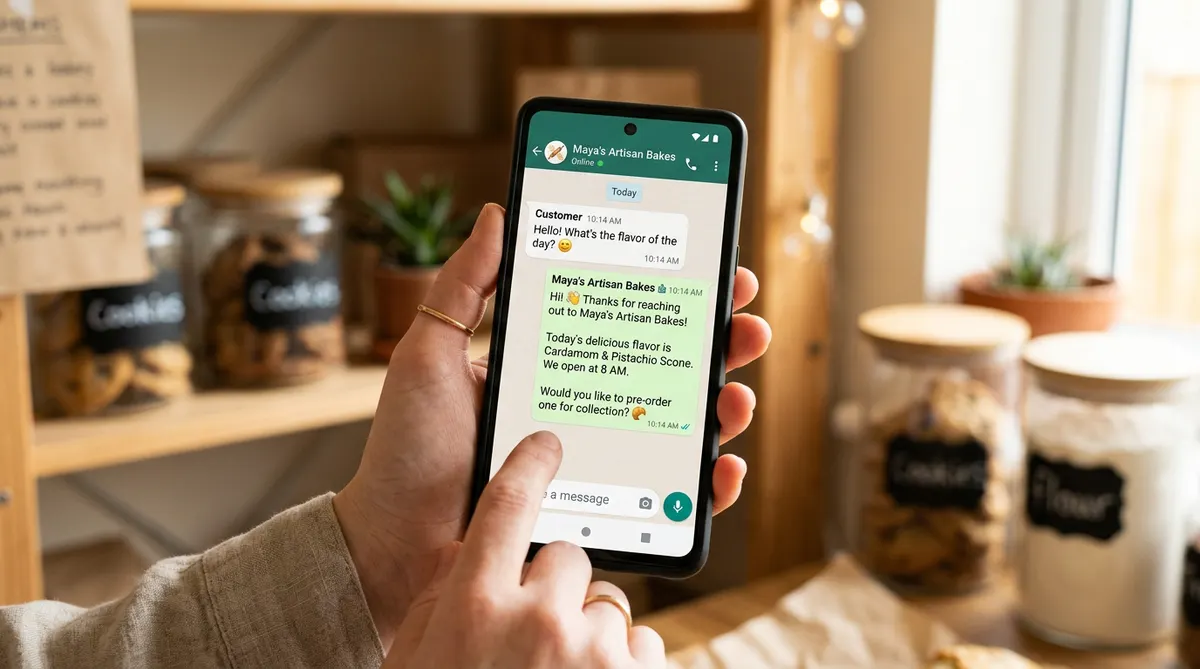
Meta built AI straight into WhatsApp Business
Since February this year, Meta has offered a native AI assistant built right into the WhatsApp Business app, no extra software, no developer required. You open Tools, turn on the business AI, and it starts answering using whatever you've already set up: your catalog, hours, address, and the questions customers ask most.
Brazil was one of the first markets in the world to get the feature at scale, which says a lot about how many people here already handle most of their shopping and booking through WhatsApp. If you run a shop, a salon, a repair business, or offer any kind of service, chances are a good chunk of your customer contact already happens there.
That solves an old problem for anyone running a small business alone: the customer who messages at ten at night asking if you have something in stock, or whether you're open Saturday, and gets left hanging until the next morning. With AI covering the first reply, they don't wait anymore.
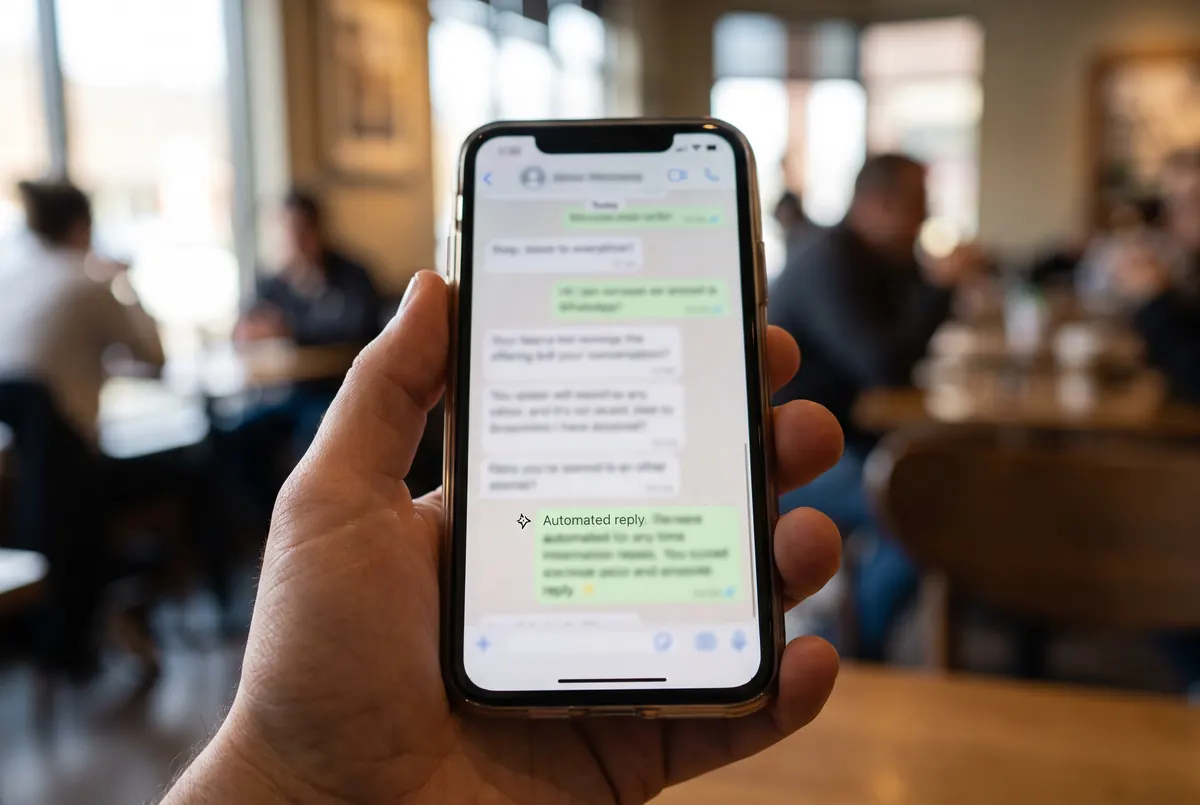
How to automate without sounding like a call center
Here's the real risk. A small business usually wins a customer for the opposite reason a badly set up AI delivers: the close conversation, the owner who remembers a name, a quick "hey, how's it going" before getting into price. If your automated reply reads like it came from a script at any big company, you lose exactly what set you apart in the first place.
A few habits keep that from happening. Write the canned answers in your own voice, not in stiff customer-service language. If you'd normally say "hey" instead of "dear customer," teach the AI to do the same. Check the answers every so often, because generic phrasing gets stale fast and customers notice. And don't try to hide that it's automated. A simple note like "messages after hours get an automatic reply, and we confirm everything first thing when we open" solves that and comes across as more professional, not less.
- Hours and address
- Prices and stock from your catalog
- Repeat questions (payment options, delivery time)
- First reply after hours
- Price negotiation or a special deal
- A complaint or a problem order
- A custom, off-menu request
- A longtime customer who deserves extra attention

When to step in yourself
What actually damages trust in a small business isn't the AI getting an hour wrong. It's the AI trying to handle something that needed a person. A customer complaining, an order that arrived wrong, someone sharing a more delicate problem: in those moments, an automated reply, no matter how well written, comes across as cold and can push the customer away for good.
The fix is setting clear handoff triggers. Whenever a customer uses words like complaint, cancel, or problem, or asks to speak with someone, the conversation should route straight to you or whoever handles customer service, with the earlier messages still visible.
Phrases that should go straight to a person
Outside those moments, letting the AI handle the rest frees up a real chunk of your day, without taking away the part that actually matters: being present when a customer genuinely needs you. Setting it up right takes some attention up front, and a bit of tuning afterward. It's not something you configure once and forget.
At IKOEH, we help small businesses organize this whole digital presence, WhatsApp included, alongside your website and how you show up on Google, all working together. We handle the setup, the wording the AI uses with your customers, and what gets left for you to decide. We handle everything end to end, with ongoing support. We work remotely with businesses internationally. Get in touch and let's talk about your business.
Frequently asked questions
Is Meta's WhatsApp Business AI a paid feature?
No, the native tool inside the app is free and comes straight from Meta. What can carry a cost is the strategy behind it, the wording, tone, and handoff rules that make it actually work well, which is where an agency like IKOEH comes in.
Does this work for both a shop and a service business?
Yes, though it plays out differently. A shop leans on the catalog for pricing and stock. A service business uses it more to answer questions, confirm appointment times, and screen requests before they reach the calendar.
Will customers realize they are talking to AI?
At some point, probably, and that is fine. What matters is being upfront about it and responding quickly once they need an actual person. Hiding that it is automated tends to bother people more than just being honest about it.